

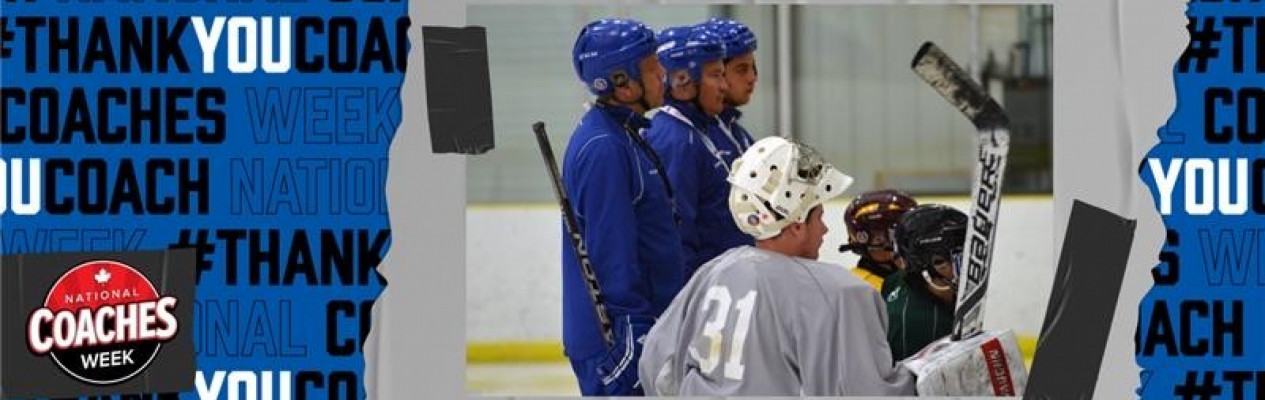
RED DEER – Hockey Alberta’s mission statement reads: to create positive opportunities and experiences for all players.
Coaches play a significant role in ensuring that.
Team Alberta alumni and NHL prospect, Morgan Klimchuk, made the transition to coaching during the COVID-19 lockdown. Following back surgery, Klimchuk was unsure if he would ever play hockey at a competitive level again, but he knew he wanted to stay involved in the game.
“I love it. It’s a new challenge every day,” said Klimchuk. “It’s one thing to know certain aspects of the game, it’s a completely different thing to be able to communicate and teach those things.”
Having played for numerous coaches with a variety of styles over the years, Klimchuk was asked if there was anyone he looked up to as a coach.
“The last coach that I played for professionally with the Belleville Senators, his name is Troy Mann. He’s not necessarily a household name,” said Klimchuk. “He’s a coach and a person who is going to get an opportunity at the highest level just because of how he treats people, how he communicates with his players aside from his knowledge of the game … (T)he way he communicates his messages, the amount that he cares about every single member of his team really resonated with me and it’s something that I try to emulate as I get started in my coaching career.”
Duncan Milroy played professional hockey for 12 seasons, including five games with the Montreal Canadiens. When he retired from playing, he had lost his passion for hockey – until he made the decision to get into coaching.
“(Through coaching) I absolutely fell in love with being on the ice again,” said Milroy. “Being a mentor for kids and the competition that comes with it … so it’s been a lot of fun coming back and it’s a newfound passion for me.”
After years of playing, it was his novice coach who left a lasting impression on him.
“I had a gentleman by the name of Dan Auchenburg, who used to be my novice coach a long time ago. Just the way he conducted himself with us as kids, I remember those things,” said Milroy.
As a former player Milroy thought he knew everything when he began coaching. His mentality was less than realistic.
“Sometimes my expectations of what players were actually able to do at that age level and their skill level might not have been there because of my lack of experience as a coach,” said Milroy. “After my first couple years and spending time with Hockey Alberta, it’s really opened my eyes up to the coaching philosophies and what you have to be looking for. It has made me a better coach … it’s given me a more realistic approach and a better teaching philosophy in order to help my kids out.”
For Stephen Pattison, Hockey Alberta’s Manager of Hockey Development, coach education programs have enabled him to provide better experiences for his players.
“The longer I’ve coached and the more education courses I’ve taken, the more I have been able to impact the players in a positive way,” said Pattison. “I have players who I coached nearly 10 years ago who I still have a relationship with, because coaching is about building relationships. Coach education programs help coaches learn ways to communicate with their players and build those relationships.”
Certain coach education programs are required to be completed each season by November 15 to be eligible to coach. Courses include information on team building, player experience, how to communicate with parents, how to organize a season and tactics/drills. Programs are available to anyone who is looking to better understand the game or may be considering coaching.
For more information on coach education or how you can make a positive impact on the players experience, visit hockeyalberta.ca.